Look, it cannot be seen -- it is beyond form.
Listen, it cannot be heard -- it is beyond sound.
Grasp, it cannot be held -- it is intangible.
These three are indefinable, they are one.
From above it is not bright;
From below it is not dark:
Unbroken thread beyond description.
It returns to nothingness.
Form of the formless,
Image of the imageless,
It is called indefinable and beyond imagination.
Stand before it -- there is no beginning.
Follow it and there is no end.
Stay with the Tao, Move with the present.
Knowing the ancient beginning is the essence of Tao.
- Master Lao-Tzu
Reason exhausted, concerns forgotten—
How could this be adequately expressed?
Wherever I go, the icy moonlight’s there,
Falling just as it does on the valley ahead.
The fruit is ripe, trees heavy with monkeys,
Mountains so endless I seem to have lost the way.
When I lift my head, some light still remains—
I see that I’m west of the place I call home.
Research published today in BMC Veterinary Research could assist veterinarians and policy-makers in the future. In this guest post, Andrea Strakova describes the history and distribution of canine cancer, an infectious disease that not only infects ‘man’s best friend’ but threatens the existence of the Tasmanian devil.
In ‘Fighting a contagious cancer’, fellow researcher, Elizabeth Murchison, speaks about the fight to save the Taz.
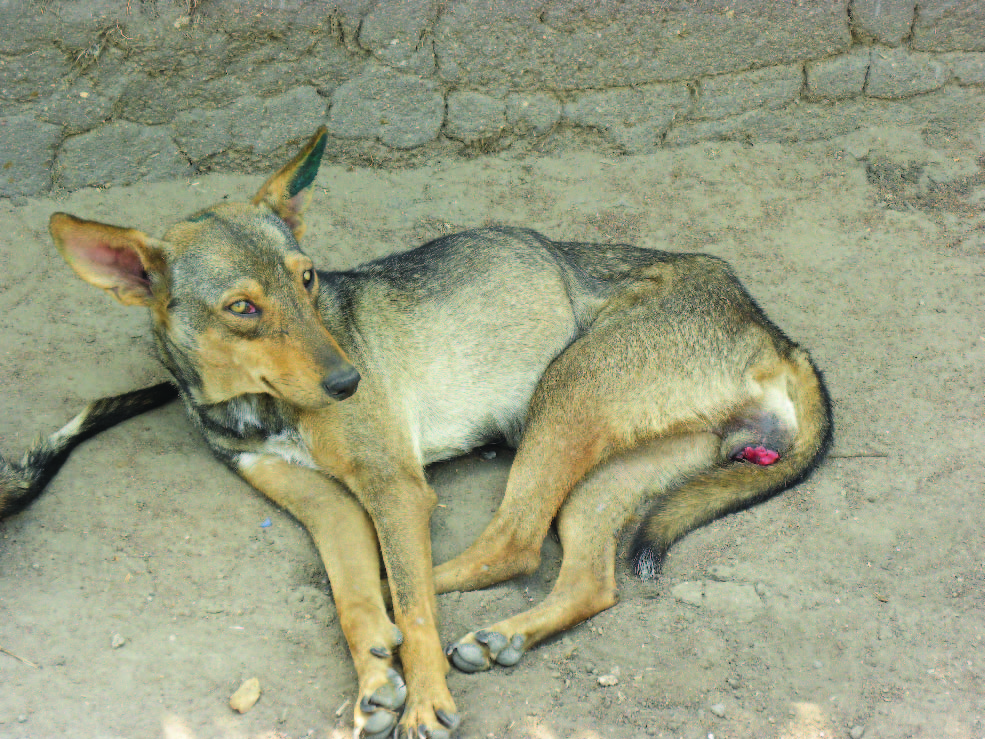
Canine Transmissible Venereal Tumor (CTVT) is a canine infectious disease that results in the appearance of tumors, usually associated with the external genitalia, in both male and female dogs. It is one of only two known naturally occurring clonally transmissible cancers, which are spread by the transfer of living cancer cells between individuals. CTVT is usually spread during mating, possibly facilitated by injuries incurred during coitus.
CTVT originally arose as a cancer in one dog that lived approximately 11,000 years ago and has since survived as a clonal lineage by transmitting through the dog population as an infectious disease. It is striking that since the emergence of this cancer in a single dog, its cells have efficiently colonized dog populations throughout the world. Although previous studies had indicated the broad distribution of CTVT, our current study has provided the most comprehensive information so far regarding the distribution of the disease.
To investigate the current global distribution of the disease, we performed a crowdsourcing study by soliciting CTVT information from veterinarians around the world. The responses to this survey, received from 645 individuals in 109 countries, indicated that CTVT is endemic in at least 90 countries worldwide.
The extraordinary efficiency of CTVT’s global spread was highlighted by its presence in some of the world’s most isolated communities and islands, including the Solomon Islands, Samoa, American Samoa, Fiji, Reunion, Mauritius, several islands in Micronesia, remote parts of Siberia, Indian reservations in Arizona and North Dakota and Aboriginal communities in Northern Australia.
Furthermore, our study also revealed that although CTVT has spread worldwide, its prevalence rarely appears to rise above 10% in affected dog populations, suggesting that only a proportion of dogs may be susceptible to CTVT infection at any one time. This contrasts with the epidemiological patterns observed in the only other known naturally occurring contagious cancer, the transmissible facial tumor affecting Tasmanian devils, in which the disease prevalence usually rises above 50% and causes population collapse.
The information on worldwide distribution and prevalence of CTVT provided as a result of our survey is of importance to veterinarians and dog owners in many countries worldwide, as although CTVT can usually be effectively treated, lack of awareness of the disease and poor access to veterinary care can cause CTVT to become a welfare concern.
Additionally, our study has implicated free-roaming dogs as a reservoir for the disease and has shown that the disease was eradicated in the UK during the twentieth century as an unintentional result of the introduction of dog control policies. We also found that dog spaying and neutering are associated with lower CTVT prevalence, further highlighting the possible health benefits of dog sterilization.
Our results add to the existing body of evidence which suggests that careful management of free-roaming dog populations, as well as the inclusion of CTVT in dog import/export quarantine policies, may help to control CTVT spread.
In the future, further studies into the pathogenesis and spread of CTVT may lead to improved methods for disease prevention, detection, monitoring and treatment. In addition, greater understanding of the adaptations that have allowed this unique long-lived cancer to efficiently colonize the world’s dog population, may shed light on the evolutionary processes underpinning cancer more generally.
This story will make you think about animals in a totally different way. Some people too often think they are "just animals" and not capable of the same feelings and emotions as us. This story goes to show that that is so far from the truth and, in fact, animals seem to care more than many humans.
This baby chimp's mother died at a zoo, so one of the caretakers took him home to help out. What she NEVER imagined was that her dog would take the chimp under his paw and adopt him. These pictures are awesome.
The chimp instantly wanted to be near the dog
Sleeping with her
Eating with the other puppies
Cuddling
Cuddling with his "brothers and sisters"
Even trying to feed from her
They all accepted the chimp as one of their own
An adopted child is still her child
This dog gave the chimp the mother he needed :)
The pictures say it all. A mother - whether human, dog, or chicken - has a love for her child, real and adopted, that is unmatched.
In a way, Tim Rickey has both the best job and worst job in the world.
On one hand, he rescues and rehabilitates dogs from dangerous environments for a living; on the other hand, he's constantly front-and-center to one of the most violent, secretive fighting subcultures in America.
"It's an ongoing mix of joy and heartbreak," he tells me. "I've seen some of the saddest sights of my life out in the field."
For the past decade, Rickey has worked with investigators to uncover illegal dog fighting operations across the United States, almost all of which involve pit bulls. This year alone, Rickey's team busted 11 different rings across the country, spanning the Midwest, upstate New York and the heart of the Bible Belt.
In 2013, he helped rescue 367 dogs from a ring in Montgomery, Alabama. In 2009, his team unearthed the largest dog fighting operation in American history, now known as the "Missouri 500," which freed 500 dogs from captivity in eight different states.
But while the stats may seem promising, Rickey says, there's no way of definitively knowing if the number of cases are actually decreasing. It's estimated that around 40,000 people are involved in the industry in the U.S. — and that's not accounting for the industries in Afghanistan, Pakistan, Latin America and eastern Europe. NPR reports it's still technically legal in Japan.
In the U.S., like most underground operations, it's an extremely hush-hush environment:
The number one rule about dog fighting is that you don't talk about dog fighting
The number one rule about dog fighting is that you don't talk about dog fighting.
"The most frustrating part about this job is that, at the end of the day, it's near impossible to really track your progress," he says. "We have no evidence if it's grown or reduced in size."
What has grown, he says, is public awareness. Since NFL quarterback Michael Vick was sentenced to 23 months in prison for dog fighting in 2007, more people have come forward to authorities with tips about potential operations near them. Social media campaigns, particularly ones geared at reducing the stigma against pit bulls, have been especially helpful: "People are savvy; they know this is happening all around them, and they're proactively trying to stop it," Rickey says.
It's undeniable progress — but he says it would be naive to think there isn't still a long road ahead.
The scene of an ASPCA multi-state dog fighting raid in 2013 that resulted in the seizure of nearly 400 dogs.
IMAGE: ASPCA
Dog fighting, as a sport, can be traced back to the Roman Empire. After the Romans invaded Britain in 43 A.D., they became instantly impressed by the aggressiveness of the British fighting dogs.
Soon, British dogs were imported into Italy to be used in war and public entertainment.
Large audiences would gather in Rome's Colosseum to watch gladiator dogs fight against other animals — including, sometimes, wild elephants
Large audiences would gather in Rome's Colosseum to watch gladiator dogs fight against other animals — including, sometimes, wild elephants. After being crossbred with the Romans' breed of fighting dogs, the new breeds were exported throughout western Europe, eventually finding their way back to Britain.
Around the turn of the 12th century, a practice called "baiting" emerged, which pitted fighting dogs against chained bulls and bears. This remained a popular form of entertainment until it was outlawed by British Parliament in 1835; soon, however, dog-on-dog battles took over as the alternative.
Shortly before the Civil War, the new British fighting dogs were imported into the U.S., where they were crossbred — again — to create the breed we know today as the American Pit Bull Terrier. Fighting became a popular spectator sport on the new continent, but most states outlawed it by the late 1860s. Still, it continued to spread in popularity throughout the world, eventually growing into the huge, underground business it is today.
"This is something that's been around since the very beginning," Rickey says. "The crazy part is that, one point in time, it was somewhat accepted."
The scene of an ASPCA multi-state dog fighting raid in 2013 that resulted in the seizure of nearly 400 dogs.
IMAGE: ASPCA
Aditi Terpstra has made a career out of rehabilitating pit bulls. Her rescue shop in Winona, Minn., takes in dogs every year who have been rescued from fighting rings.
Following the Michael Vick conviction in 2007, she says, rescued pit bills were given the opportunity to be saved. Prior to that, nearly every pit bull rescued from a fighting ring was euthanized, no questions asked.
"The case was definitely a turning point," she says. "The fact that he was a high-profile celebrity attracted a lot more attention, and people started demanding that these dogs be given a chance at having new lives."
Now, each dog rescued from a fighting ring is sent to a temporary rehabilitation center while the case is decided. The dogs are technically considered evidence, Terpstra says, so they're held in the centers until each owner is prosecuted. The shelters also serve as tests to determine if the dogs are adoptable — if they pass the test, they're released to adoption shelters after each case.
Typically, she says, about 40% of them are deemed OK for adoption; the remaining 60% are euthanized because they're feared to be too aggressive
Typically, she says, about 40% of them are deemed OK for adoption; the remaining 60% are euthanized because they're feared to be too aggressive.
"One thing that most people don't realize is that this truly crosses all social and economic lines," Terpstra says. "It's very prominent in poorer areas in the rural South, but, as the Vick case shows, it's also common for affluent people to be involved. There's no basic demographic."
"Blood sports," a group in which dog fighting is included, involves any event where animals are forced to fight for financial gain, according to the ASPCA. Cases usually involve either dog or cock fighting.
"Cock fighting is just as brutal," Rickey says. "There, people strap razor blades to roosters' legs, so they're literally slicing one another to pieces. But that's a different story."
The money involved, like the operations in general, is widely unknown. But Rickey guesses some matches have pots as high as $10,000.
Most dog fights are planned months in advance. Typical breeders will keep their dogs tied up with 20-pound chains in a hidden yard in the country; if they're in an urban environment, they're usually stacked in kennels in a basement.
The dogs are rarely fed, maybe once every two days, and kept, for the most part, in complete isolation
The dogs are rarely fed, maybe once every two days, and kept, for the most part, in complete isolation. If a dog is chosen to compete, he or she will begin a 16-week training program, where they're fed and given immense attention from the owners — "an attention they desperately crave," Rickey says.
In training, the chosen dogs are forced to fight against smaller dogs, known as "bait dogs," that are tied up and muzzled. The idea is to increase the fighter's confidence. The bait dogs can't fight back; it's a guaranteed bloodbath.
The actual fights take ages. Unlike most movie portrayals, with one dog ripping out another's throat, it takes hours to end: small bite by small bite, scratch by scratch. It's more of an endurance match than it is a fight.
If a dog survives, it might be used to fight again; if it doesn't fight again, it goes back on the chain and is used to breed new, younger fighters.
"These are extremely affectionate dogs. They just want to please their owners," Rickey says.
"I've seen videos of dogs trying to escape the ring during a fight. The owner leans down, whispers something into the dog's ear, and affectionately brings it back to the ring to fight. They don't want to fight; they don't know better. They're just trying to satisfy their owner so they don't go back to months, or even years, of isolation again."
The scene of an ASPCA multi-state dog fighting raid in 2013 that resulted in the seizure of nearly 400 dogs.
IMAGE: ASPCA
So what — if anything — can the public do to make Rickey's job easier? Be mindful, for one, but not overly accusatory.
"There are clear signs: If you see dogs chained up to really heavy log chains," he says, "or if there are visible scars or ears ripped off of them. You may even notice a group of dogs that are coming and going frequently from one location."
The biggest hope he has, he says, is that the negative perception against pit bulls continues to decrease. The rehabilitation centers are there for a reason; if a dog is truly incapable of overcoming its brainwashed aggression, it won't be sent to adoption centers. But the others — the ones that have been rehabilitated and saved — are generally sweet, timid animals who've spent their entire lives weighed down by a chain.
"In the videos from these cases, I've watched a dog literally scream in agony and seeing them panic — especially as people on the outside laugh — and it's without a doubt one of the most heartbreaking things I've ever seen," he says.
"These dogs are victims of an unspeakable crime. They're not the enemies here."
With President Obama arriving Sunday, India faces a special challenge in trying to chase troublesome but venerated animals like cows and rhesus macaque monkeys out of view.
Budi the orangutan is recovering after almost a year of neglect
By Tricia Gilbride
Budi the orangutan is recovering after almost a year of serious neglect.
The tiny ape spent the first 10 months of his life in a chicken coop and was severely malnourished after surviving only on condensed milk.
Before his rescue, Budi was a family pet in Ketapang, Indonesia. The milk alone couldn't provide the nutrients the growing orangutan needed to properly develop.
He traveled for 10 hours to the International Animal Rescue (IAR), where he is currently being nursed back to health. Recovery is a slow process, though, since Budi's limbs are malformed due to undernourishment.
Image: Rex Features
"His little body was bloated with fluid from severe malnutrition and his limbs were swollen and bent. He was completely unable to move or even sit up on his own," IAR Director Karmele L. Sanchez told The Daily Mail. "At more than a year old, he should have been strong enough to climb and swing. Instead, he was as helpless as a newborn baby."
Image: Rex Features/Associated Press
Budi is making progress; he can now sit up on his own for short periods. It's still too early to tell whether any of the damage inflicted is permanent, but his caretakers are optimistic that his resilient spirit will help him recover.
Published on Jan 22, 2015
Budi is a baby orangutan that has been rescued by International Animal Rescue in Indonesia.
For the first year of his life Budi was kept in a chicken cage and fed on nothing but condensed milk which was slowly killing him.
On arrival at IAR's orangutan rescue centre Budi's condition was extremely critical, and he was too frail to move or sit up on his own. He was showing signs of severe malnutrition and screaming in pain every time he was moved by the vets. This video shows vet Karmele feeding Budi from a bottle and vet Jaclyn weighing him.
Our team of experts are working around the clock to monitor and treat Budi. He has a very long way to go on the road to recovery and we are appealing for donations towards his treatment and care. http://www.internationalanimalrescue....